Star-Navi's Advanced Infrared Signature Reduction Fabric cuts thermal visibility without the bulk of conventional insulation-based IR camouflage.
A reconnaissance team moving into position after dark can defeat the naked eye with the right camouflage pattern and still light up on a thermal scope like a lamp in a dark room. Visual concealment has never been the hard part of staying hidden after sunset. Body heat is. As thermal imaging equipment spreads from specialized military units down to routine security patrols and commercially available scopes, the gap between looking hidden and being thermally hidden has become the more pressing problem for dismounted personnel and fixed observation positions alike.
Conventional infrared camouflage has mostly answered that problem with insulation, thick barriers that trap body heat before it reaches the outer surface. It works, but it comes with a cost in bulk, breathability, and comfort that makes it impractical for anything beyond short, static use. Star-Navi\'s newly introduced Advanced Infrared Signature Reduction Fabric takes a different route. Instead of blocking heat from escaping, the material carries a specially developed coating applied to a textile substrate that is designed to reduce the infrared radiation emitted from the fabric\'s outer surface, even as body heat continues to pass through it.
A coating, not a barrier
That distinction matters for anyone who has to wear concealment gear for hours rather than minutes. Because the fabric is not relying on thickness to trap heat, Star-Navi describes it as thin, soft, and breathable, with durability the company says is comparable to conventional camouflage textiles. The material is supplied as a raw coated fabric rather than a finished garment, so customers cut, sew, and integrate it into their own jackets, covers, ghillie elements, or concealment nets rather than adapting to a fixed product shape.
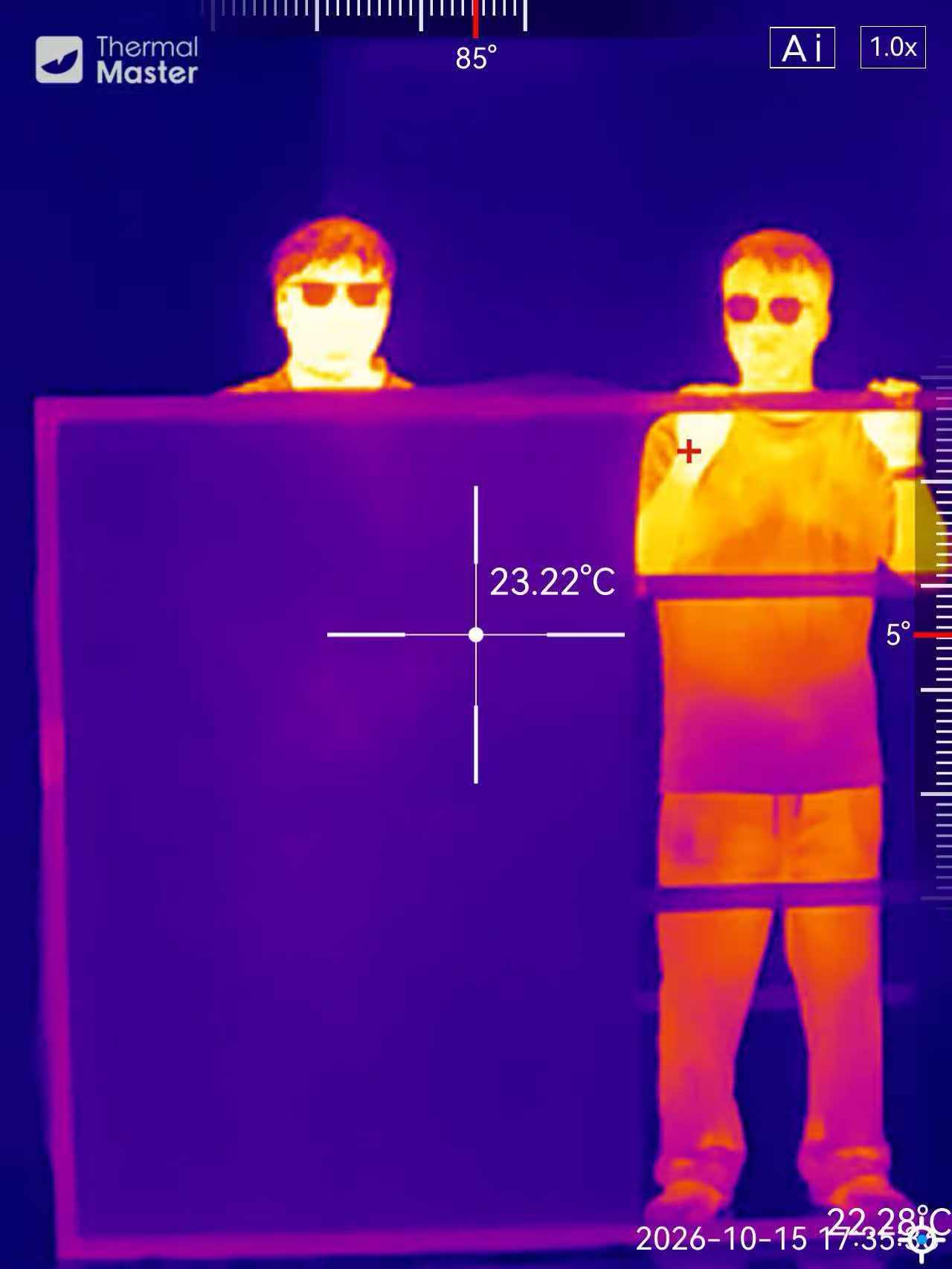
Star-Navi has backed the claim with side by side thermal camera comparisons rather than specifications alone. In a close range demonstration at roughly three meters, a subject\'s exposed legs registered as a clear heat source while the torso covered in the fabric showed sharply reduced thermal contrast against the background. A second test at approximately fifty meters showed a crouched subject clearly visible against vegetation on thermal imaging before covering, and effectively blended into the surrounding terrain on the same camera once the fabric was in place, according to the company\'s reported results.
As thermal optics keep getting cheaper and more common outside dedicated military channels, signature management is becoming as routine a planning consideration as pattern and color once were for visual camouflage. A textile that an integrator can cut and sew into existing gear, rather than a bulky insulated add on, points toward thermal concealment becoming a standard layer in personnel and perimeter security kit instead of a specialized exception reserved for high end units.